
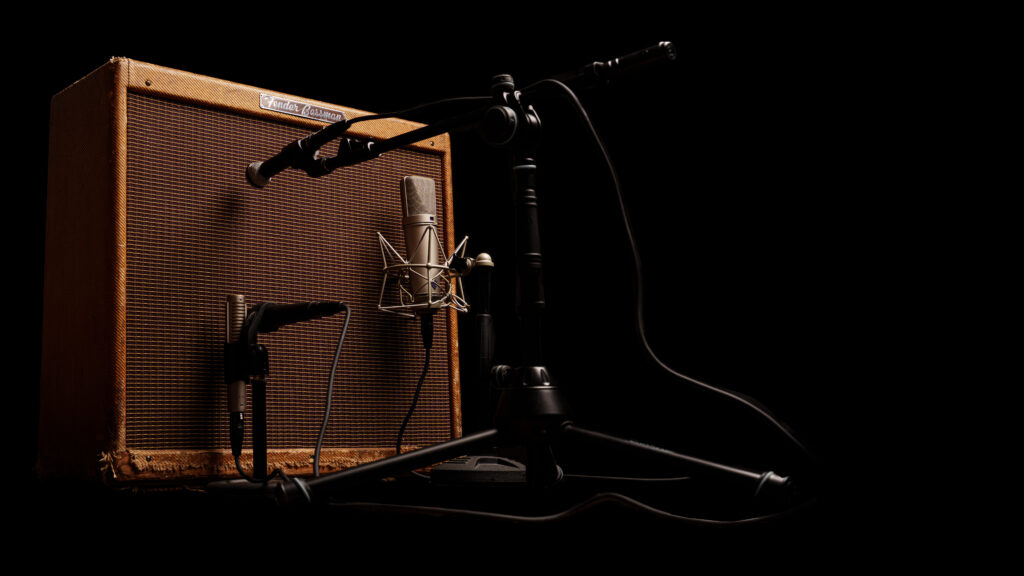
We are now over 4 years in into the amp capture business, which can be considered as
rather fresh to the game. But those have been some very intense years with a rapid release
cycle (on a weekly basis and even more frequent than that in the first years) and we have
been reinvesting everything back into our company.
As a result my initial private collection consisting of a 1964 VOX AC30 Top Boost Super Twin,
a 1964 Fender Super Reverb modded into a head, a 1973 Orange OR120, a 1976 Hiwatt
DR504 and a highly authentic Marshall JTM 45/100 clone (that me and my engineer built
after I had gathered every single era correct part for that specific model within 5 years) grew
into a serious collection of 140+ amps. I have owned about 200 amps during this period of
time and have owned several specimen of some of the most desirable and iconic amps out
there while arriving at some truly exceptional specimen that have remained with me.
The collection consists of about 80 amp heads and 60 combos, while mpost of the usual
suspect boutique, modern and high gain stuff can be found here, we specialize mostly in
vintage amps and it is where our heart is the most of the time. Vintage JMI era VOX amps,
12 real plexi Marshalls, pre CBS era Fender amps – Weeds, Black panel, Brown panel, you
name it.
But we also love going away from the beaten track and explore amps that fly under the
radar for most of us. We anjoy discovering the “off brand” amps, the goofy and weird ones.
And while doing this, we have had some phenomenal sounding surprises. One of the biggest
revelations to me are the Tweed Era Gibson amps. Though Gibson is one of the biggest
names in guitars, it is almost irrelevant in the discourse of vintage amps. I think it is the most
underrated and underestimated vintage amp brand. The best models from that line will rival
anything from any other brand – vintage or modern.
The GA-19RVT Falcon and GA-20 Ranger in particular are some of the best amps on the
planet that deserve to be mentioned in one sentence with an AC30, Tweed Bassman or Plexi
Marshall. Most of the Gibson amps were designed by Seth Lover – the same guy behind the
PAF pickups, which were a very clever approach to get rid of the single coil hum, while
keeping a very similar tonal signature to the P90.
Another recent revelation was that the Laney Supergroup amp is one of the best clean amps
and pedal platforms ever, despite it never being mentioned in that context. We’d like to
claim to be behind coining the term “Laney clean” 🙂
While there are plenty undervalued amps out there, one of the things I’ve learned after
owning over 200 highly desirable amps is that the most iconic and legendary ones are so
desirable and expensive not just because of the association with famous users or
provenance – it is always the combination of that, but also of the tone.
When I worked on that super authentic Marshall JTM 45/100 clone, I wanted to believe that
it will nail the tone of an original one, while I would have never had the chance to make sure
it does. What I learned after recently having the unique opportunity of comparing a real one
to the clone – the differences were NOT subtle. The original was much bigger sounding,
warmer, fuller and just gave up THAT TONE easily. Hendrix at Monterey – no problem, early
Cream stuff – no problem. Clones and reissues, while they can sound great (and my 45/100
clone does indeed sound fabulous), do not sound the same as the old equipment, period. As
to if that difference is important and worth the money difference to you personally, Is an
entirely different question.
The good news from all this is though – you do not need to get the expensive vintage stuff
to get those tones anymore thanks to the modern capturing tech, which will deliver you the
tones with 98% accuracy, while the remaining few percent are barely perceivable anymore
in scrupulous A/B comparisons and don’t really matter anymore. ToneX, Cortex, NAM and
now Stadium will all get you the authentic experience of our collection.